

The answer, in most cases, is no. And that answer is becoming a bigger problem for brokers every summer.
The coverage gap
Standard commercial property insurance was designed for a world of discrete, visible perils — fire, storm, theft, flood. It covers damage from external forces. It does not cover the slow bleed of revenue that happens when a building becomes too hot to work in.
The exclusions are specific. If a client's HVAC compressor fails during a heatwave — the precise moment cooling matters most — their property policy will not cover the repair. Internal mechanical and electrical failure is explicitly excluded from standard commercial property wordings. The client needs a separate Equipment Breakdown endorsement, and many small and medium businesses don't carry one.
Business Interruption coverage exists, but it typically requires a triggering event from a covered peril. A heatwave that forces a bakery to close at 2pm because kitchen temperatures become unsafe is not a covered peril under most standard forms. Neither is a 40% throughput reduction in a warehouse where workers are legally permitted to slow down but not formally ordered to stop.
The result is a structural gap: your client's largest weather-related revenue risk may be the one thing their policy is designed not to address.
What's emerging
The insurance industry is not standing still. Several developments are worth watching and discussing with commercial clients.
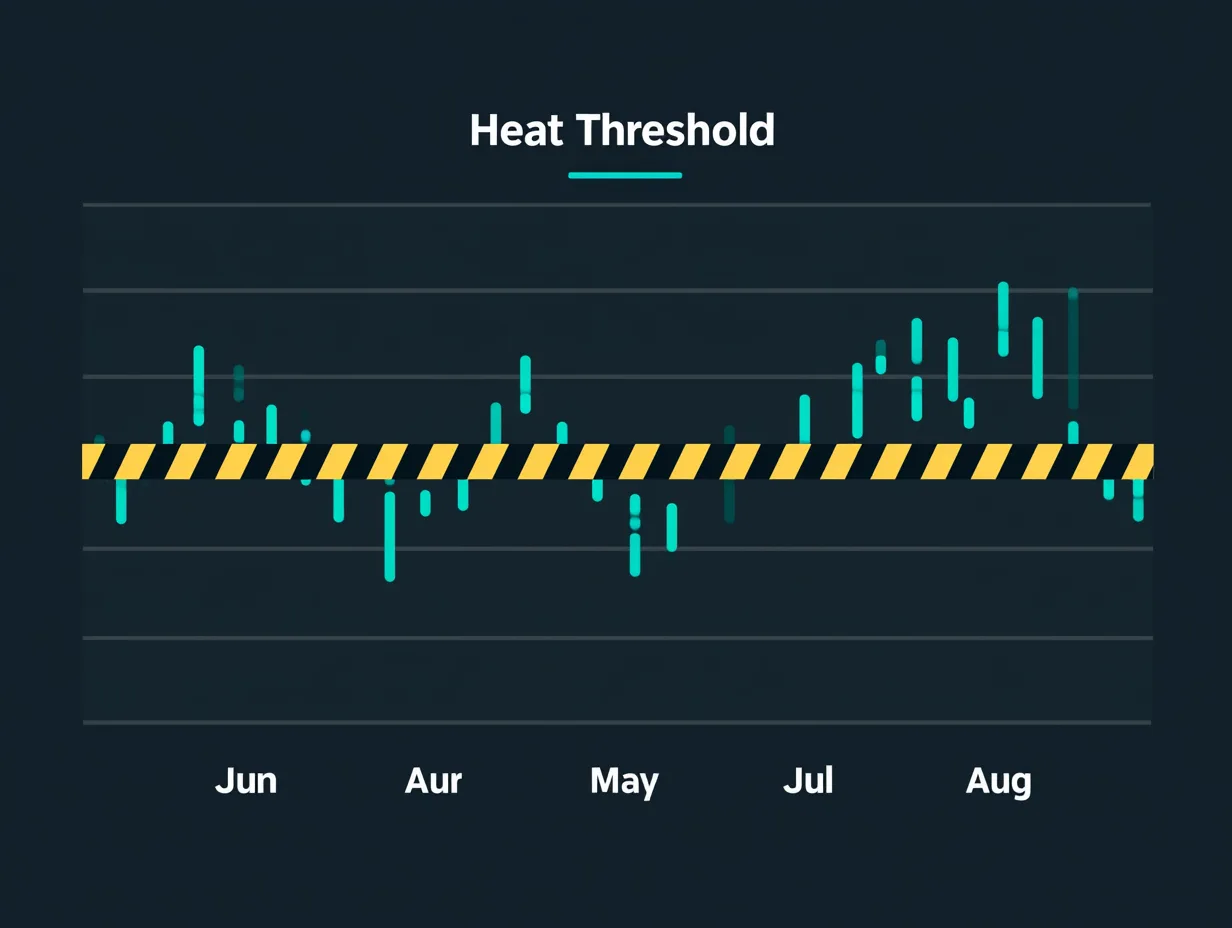
For brokers, parametric coverage fills a specific role: it compensates for the revenue loss that traditional Business Interruption won't touch. But sizing the exposure — how much a client actually loses per heat day — requires data that most businesses don't have.
Equipment Breakdown endorsements are also seeing renewed interest. With HVAC systems working harder and failing more often during extreme heat, Equipment Breakdown is moving from a nice-to-have to a recommended standard inclusion for any commercial client with significant cooling or refrigeration infrastructure. Brokers who proactively recommend EB coverage before a client's system fails in August are doing their job well.
Resilience-linked premium adjustments remain early-stage, but the direction is clear. Clients who invest in cooling upgrades, roof insulation, and energy-efficient HVAC are demonstrably lower-risk. Regional MGAs and mid-market brokers — rather than national carriers — are best positioned to reflect this in pricing, because they have the flexibility to underwrite on a case-by-case basis rather than at portfolio level.
The broker's opportunity
The commercial client who calls you about heat isn't looking for sympathy. They're looking for someone who understands the problem and can propose a path forward.
That path has three parts. First, quantify the exposure — how many heat days per year does this business face, and what is the estimated revenue impact given their building type, location, and cooling status? Second, recommend mitigation — which building upgrades would reduce the impact, what do they cost, and which government incentive programs help pay for them? Third, adjust the coverage — add Equipment Breakdown if it's missing, evaluate parametric options where they exist, and document the risk reduction that upgrades deliver.
Brokers who can walk a client through all three steps — exposure, mitigation, coverage — become risk advisors rather than policy administrators. The tools to do this at scale, embedded in a broker's own client portal, are now available.
The heatwave isn't going away. The question is whether your clients hear about the risk from you, or from their competitor who already adapted.
AtlasAdapt builds white-label resilience tools that insurance brokers embed in their client portals. Our heat resilience calculator quantifies heatwave business impact and upgrade ROI, with country-specific incentive data. Learn more →
Sources: Inszone Insurance (HVAC exclusion from commercial property, May 2026); Allianz Research (heat day economic impact); French Labour Code (July 2025 decree); Business Model Analyst (parametric insurance growth, June 2026).