Heat Waves Disrupt Business Operations, But Buildings Themselves Are the Problem.
July 2026 · By Richard Hall
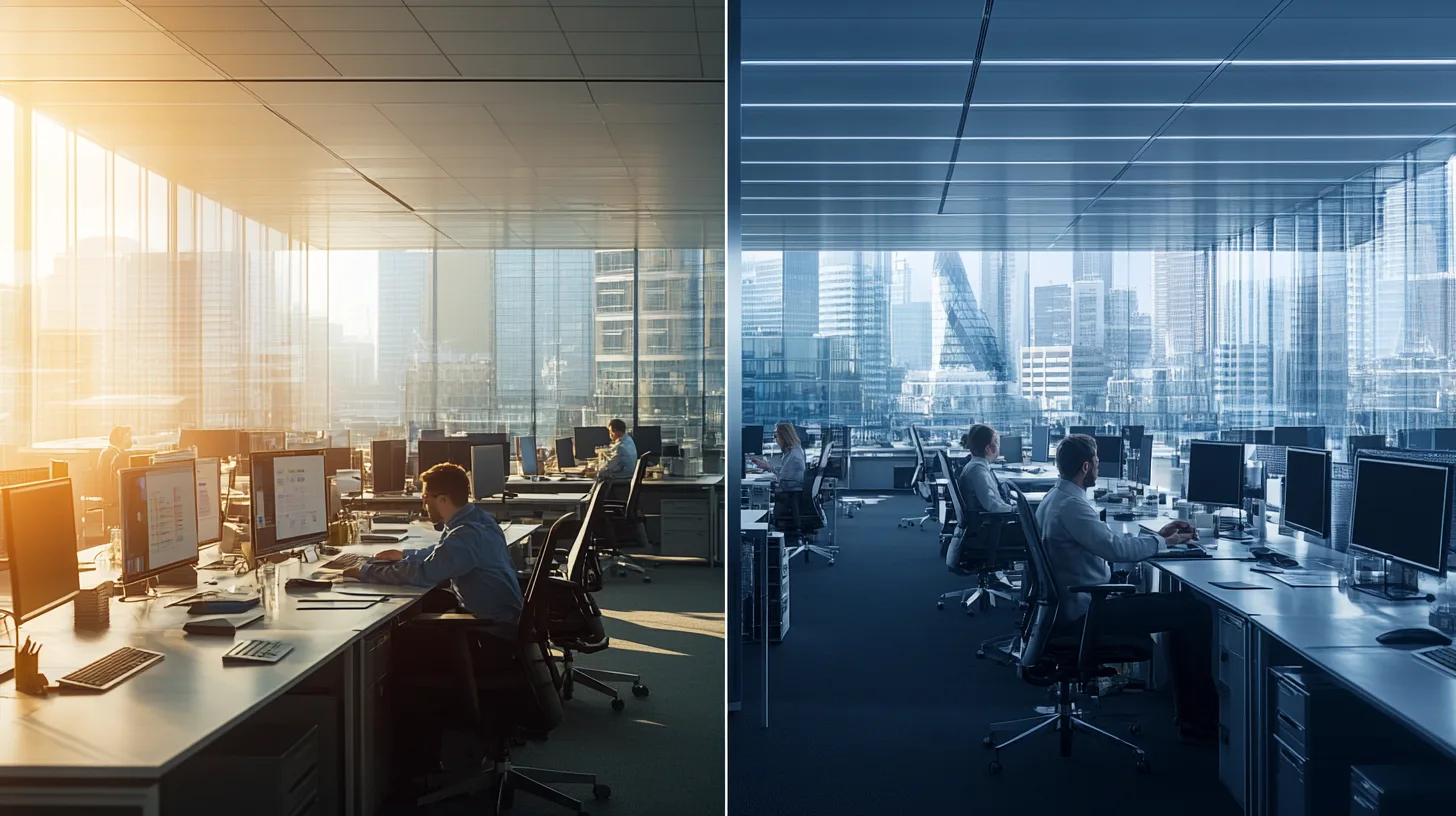
AtlasAdapt helps companies plan for heatwavesWhen record temperatures swept across London and Paris in late June 2026, the disruption extended well beyond outdoor workers and transport networks. Major banks relaxed return-to-office policies. Schools closed, forcing parents to stay home. Employees faced a choice between sweltering commutes on trains without air conditioning and working from apartments designed to retain heat rather than reject it.
The episode exposed an uncomfortable reality for commercial property owners and the businesses that occupy their buildings: much of Europe's existing building stock — and a significant share of US commercial property especially in states not used to such heat waves — was not built for the temperatures it is now routinely experiencing.
The Productivity Cost Is Real and Growing
ING Group recently warned that heat waves represent a material downside risk to European economic growth, projecting accumulated losses equivalent to 0.8% of GDP by 2029 as workers become less productive, supply chains are disrupted and customers stay away. That figure will only grow as extreme heat events become more frequent and more intense.
For commercial property owners, the impact is immediate. Buildings without adequate cooling systems, heat-reflective surfaces or backup power lose tenants, lose productive hours and face rising insurance costs. Businesses operating in those buildings — from banks to restaurants to datacenters — absorb the losses in lower output, higher energy bills and staff unable to work effectively.
The financial case for upgrading commercial buildings to withstand extreme heat is strong. The challenge, as with most resilience investments, is navigating the economics: what does each upgrade actually cost, what grants and incentives are available, and how long does it take to pay for itself?
Resilience Upgrades That Address Heat
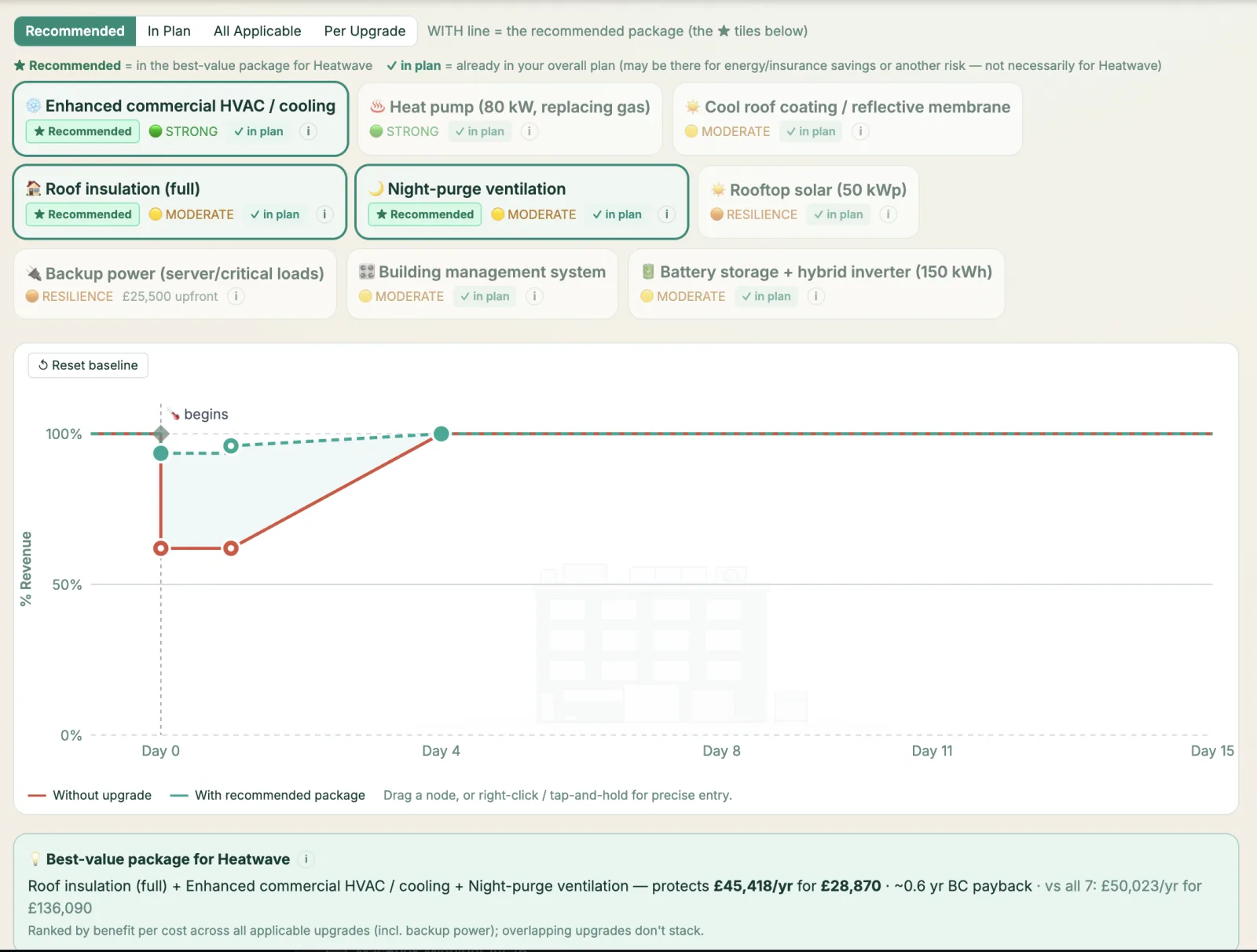
AtlasAdapt generates a plan recommending upgrades and identifies productivity savings for heatwaves and other climate eventsThe range of commercially available upgrades for heat resilience is broader than most building owners realize. Cool roofing and heat-reflective coatings reduce internal temperatures and cut cooling energy costs. High-efficiency HVAC systems maintain productivity during prolonged heat events. Battery storage paired with solar panels can offset peak energy costs during the exact hours when cooling demand — and electricity prices — are highest. Improved insulation works in both directions, keeping buildings cooler in summer and warmer in winter.
For businesses with specific operational vulnerabilities — commercial kitchens, temperature-controlled storage, outdoor loading areas — targeted upgrades can prevent the kind of forced closures and spoilage losses that erode margins during every heat event.
Each of these upgrades carries an upfront cost. But each also qualifies for a specific combination of federal, state, municipal and utility incentive programs that can reduce the net investment substantially — and each generates ongoing savings from lower energy bills, reduced insurance premiums and avoided business disruption.
Making the Numbers Visible
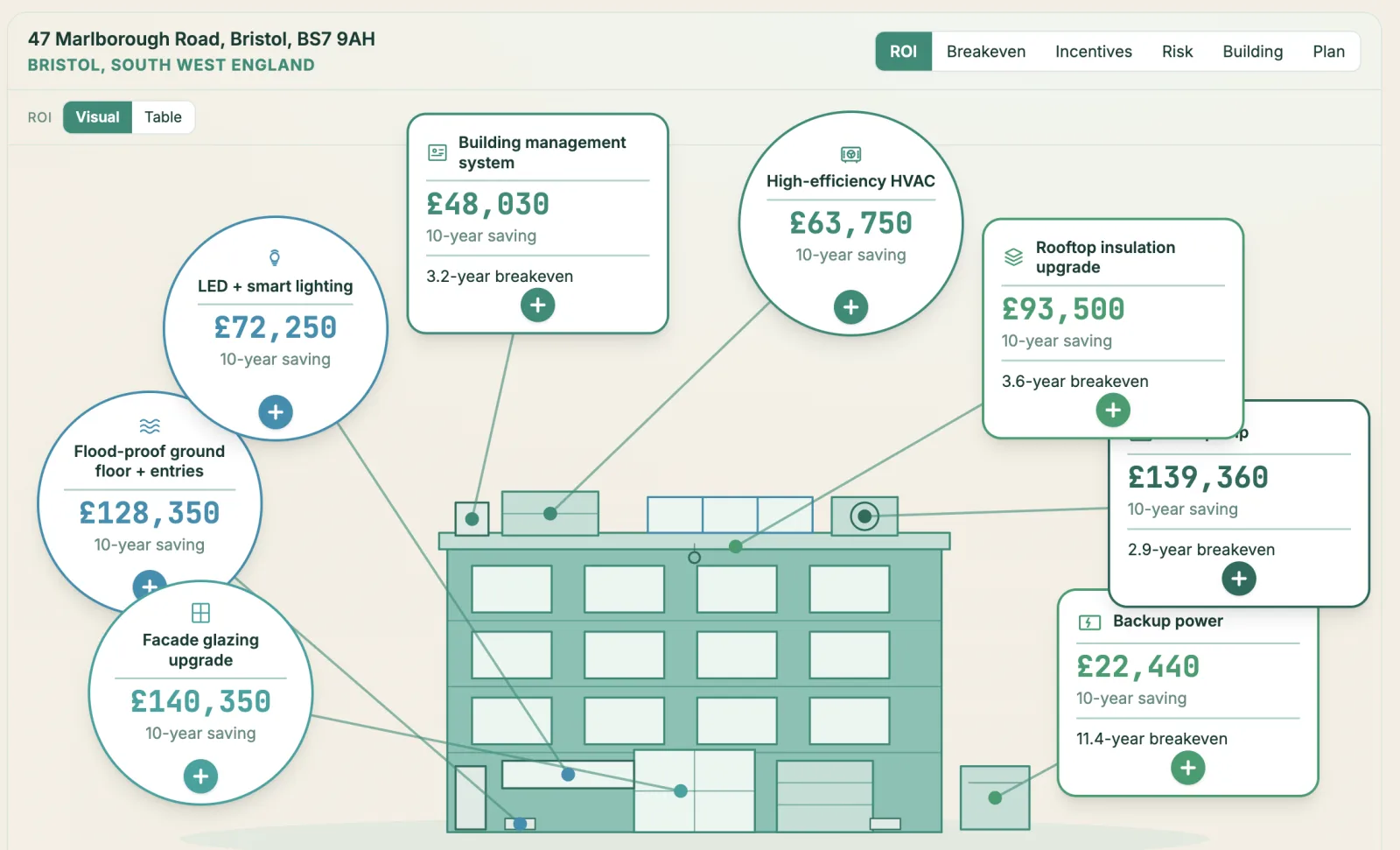
AtlasAdapt shows the ROI of building upgrades that mitigate heatwaves and other climate eventsAtlasAdapt is built to make that financial picture clear for commercial property owners and the insurers, brokers and lenders who serve them. Our platform aggregates resilience upgrade incentives across government and utility sources, combines them with installed cost estimates and models annual savings from reduced energy consumption, lower insurance costs and avoided disruption — all specific to a given property address, building type and business operation.
The result is a clear answer to the question every building owner asks when temperatures break records and productivity drops: what would it cost to fix this, and how quickly would it pay for itself?
For most commercial properties, the answer is more favourable than expected — particularly once applicable incentive programs are factored in.